Spend Where It Matters: A Smarter Way to Plan Curtains and Blinds
When planning curtains and blinds for an entire home, it is tempting to begin with a list of products and features. Motorised blinds throughout, sheers in every room or matching treatments on every window can create consistency, but they may not reflect how the household will actually use each space.
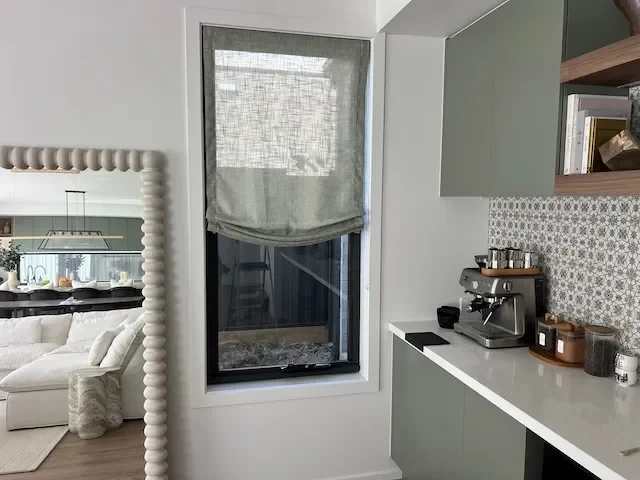
I prefer to start with the room itself. Who uses it? When do they use it? What needs to change throughout the day, and what is likely to remain in the same position?
Answering those questions early can prevent unnecessary spending and leave more of the budget available for the fabrics, finishes and rooms that matter most to the customer.
What changed between two very similar homes
A builder we worked with some years ago was constructing a large family home and wanted to motorise almost every curtain and blind.
The ensuite sat at the front of the house, with a large window directly in front of the bath and very little privacy from the street. We planned a blockout blind to provide light control when required, with a sheer curtain in front to maintain privacy and soften the room.
Motorising the blockout blind made sense because the family would raise and lower it regularly. The sheer had a different job. It needed to remain closed so that someone could use the bath without being visible from outside, which meant it would probably only move when the window was being cleaned.
Sam explained that there was little benefit in paying for a motorised track when the sheer would remain in the same position almost all year. The client still wanted it motorised, so that was what we supplied.
A similar conversation happened in the children’s playroom. The curtain was expected to remain closed most of the time, but he chose to motorise that track as well.
A few years later, the same builder constructed another home nearby with a very similar layout. When Sam met with him again, he raised the ensuite before she had the chance and admitted that they had barely moved the motorised sheer. The playroom curtain had not needed automation either.
For the second house, he kept motorisation where his family had found it useful and left it out where it had added little to the way they lived. He was not reducing the quality of the home. He was making better-informed decisions about where the money would make a noticeable difference.
Giving the budget a more useful job
Choosing not to motorise a curtain that rarely moves can free up money for something the customer will appreciate more.
That might be a beautiful fabric in the main living area, greater fullness in the curtains, a quality lining or stronger hardware for a large window. The same money could help solve a bedroom where light control is especially important or complete another room that may otherwise have been postponed.
There is also a practical reason to consider the quality and fit of a window furnishing before adding optional features. Australian Government guidance states that up to 40 per cent of a home’s heating energy can be lost through its windows and recommends well-fitted curtains and blinds to help reduce heat transfer. In some rooms, directing the budget towards suitable lining, greater coverage or a better-fitted treatment may improve the comfort of the home more than motorising a furnishing that rarely moves.[1]
The principle applies beyond motorisation. A main living room may benefit from sheers and lined curtains because appearance, daytime privacy and evening light control are all important. A guest bedroom may only require a well-made blockout blind. A window facing a private garden may not need the same privacy treatment as one facing the street.
The products do not need to be identical for the home to feel connected. Colour, texture, headings and hardware can create consistency without adding every possible layer or feature to every window.
Where motorisation earns its place
There are many situations where I recommend motorisation confidently because it has a clear purpose.
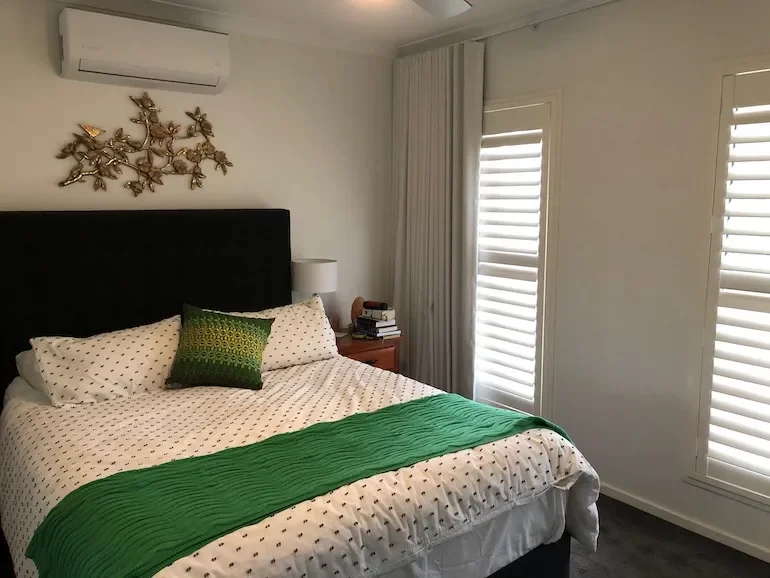
A blockout roller blind positioned behind a sheer curtain in a master bedroom is a good example. It may be operated every morning and evening, and without a motor, the sheer needs to be moved each time someone reaches the blind. Motorisation makes that routine easier while reducing unnecessary handling of the fabric.
It can also be valuable for large or inaccessible windows, homes with numerous blinds, or customers who find cords and chains difficult to operate because of limited strength or movement.
Safety may influence the decision as well. Australia has mandatory standards for corded internal window coverings because unsecured cords and chains can present a strangulation risk to young children. A correctly specified motorised blind can remove the need for an exposed operating chain, making it worth considering in a child’s bedroom or family living area.[2]
In each of these situations, the motor is addressing something specific. It is improving access, removing a repeated inconvenience or helping create a safer solution.
The builder’s first home is a useful example because the problem was never motorisation itself. The issue was applying the same upgrade to almost every room without considering whether each furnishing would need to move.
Planning around the way you live
Before deciding what each window needs, I would think through an ordinary day in the home.
Which curtains and blinds will be opened every morning and closed every evening? Where is daytime privacy essential? Which bedrooms need stronger light control? Are there windows that are difficult to reach? Does anyone in the household find a manual product uncomfortable to operate?
Once those priorities are clear, it becomes much easier to decide where an additional feature will be worthwhile and where a simpler treatment will do the job properly.
My role is not to add the most expensive option to every window. It is to understand what the customer wants each room to do and help them use the available budget with purpose.
Sometimes that means recommending motorisation. Sometimes it means leaving a motor out and putting that money towards a fabric the customer loves, a more effective lining or another room that needs greater attention.
Planning this way does not make a home less considered. It makes every investment easier to explain because every product and feature has a reason to be there.
Planning curtains or blinds for more than one room?
We’re here to help you decide where to invest, where a simpler treatment will work well and which choices will make the greatest difference to the way you live.
References
Australian Government, Windows and Quick wins to save energy:
Australian Competition and Consumer Commission, Blinds, curtains and window fittings mandatory standard: