Designing Curtains for Rasasara Skinfood’s New Frankston Shop
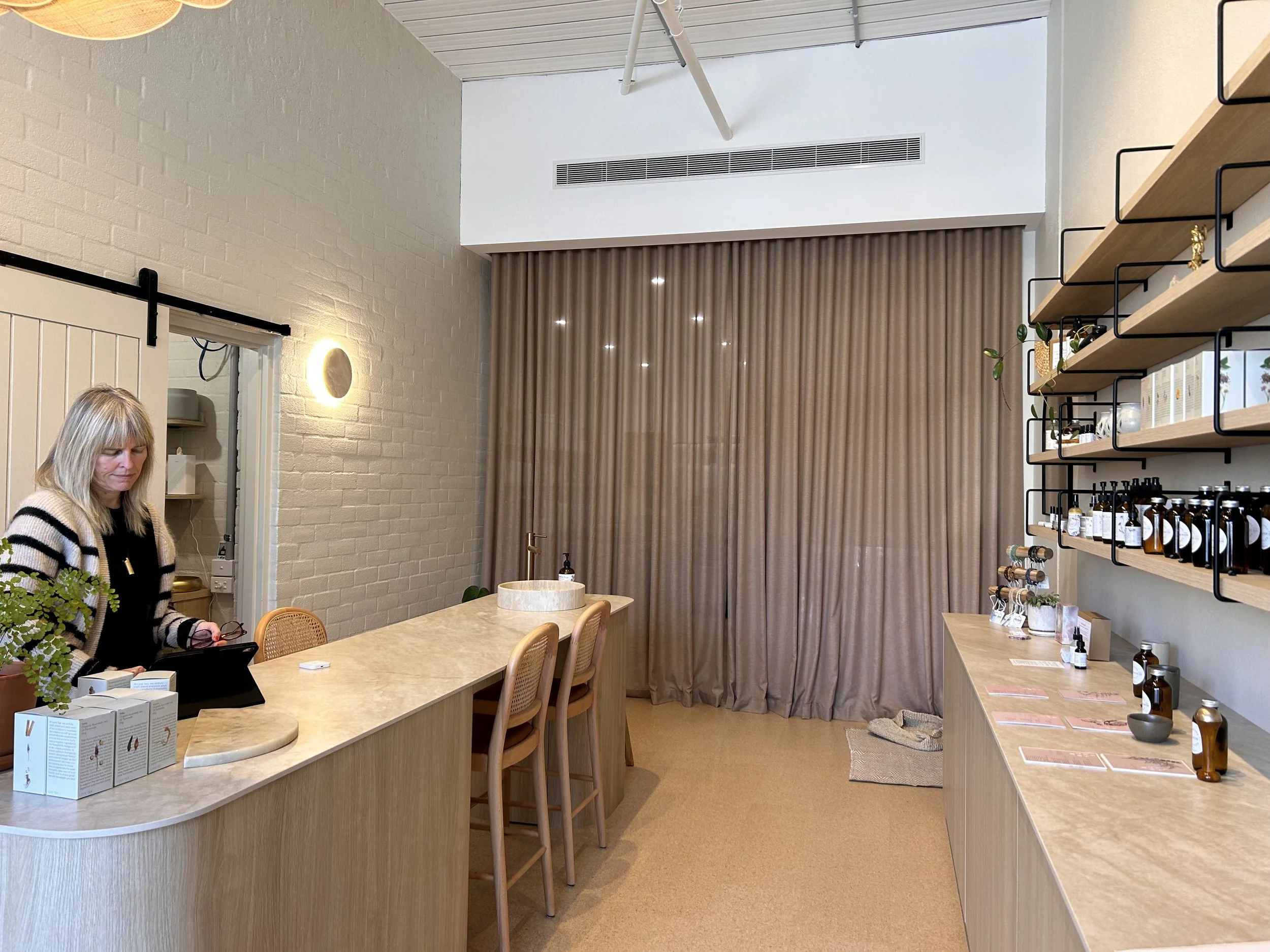
Rasasara founder Sonia Lloyd at the shop counter with full-height clay-coloured curtains and skincare shelves behind her.
By the time a business opens a physical storefront, its identity has usually been shaped by years of work. The interior then has to give that identity a place.
Rasasara Skinfood was launched by founder Sonia Lloyd in 2003, following her own experience with Ayurvedic preparations and their effect on her skin. Its skincare continues to be handmade in small batches, guided by a strong connection to natural ingredients, mindful care and the principles of Ayurveda.
In May 2026, Rasasara opened its shop in Frankston. It created a physical home where customers could experience the range in person, receive treatments and learn more about the practice behind the products.
Our connection with Sonia began before the shop existed. Evans Curtains and Blinds had previously completed window furnishings for her home, so being invited to work on the new premises allowed that relationship to continue into a very different space.
For a Frankston business, there is something particularly rewarding about contributing to the next stage of another established local business.
Giving each part of the shop its place
The premises needed to accommodate the customer-facing shop as well as a treatment room, office access and the area where Rasasara products are made.
The practical requirement was separation. The more considered question was how to achieve it without interrupting the character of the interior.
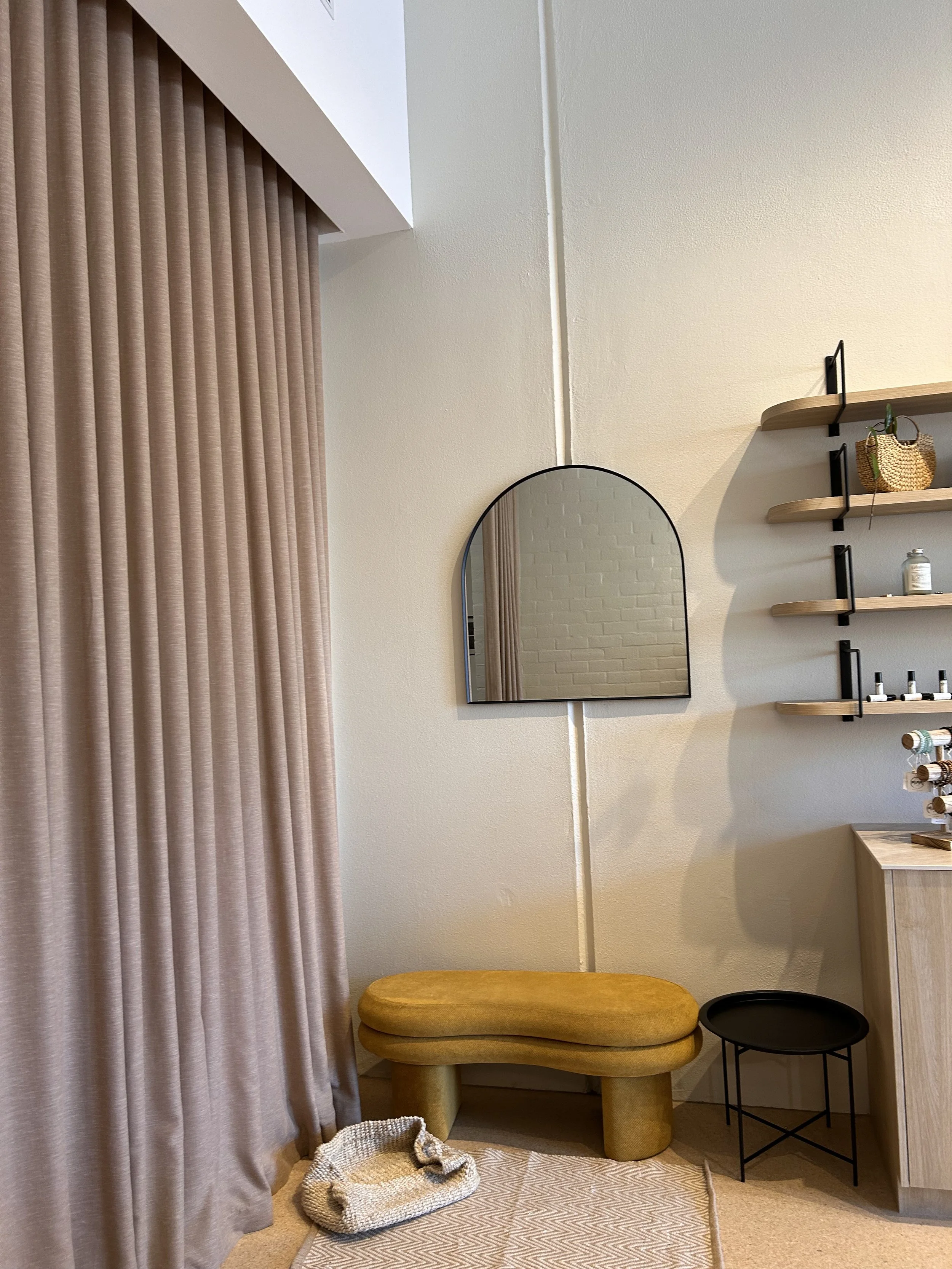
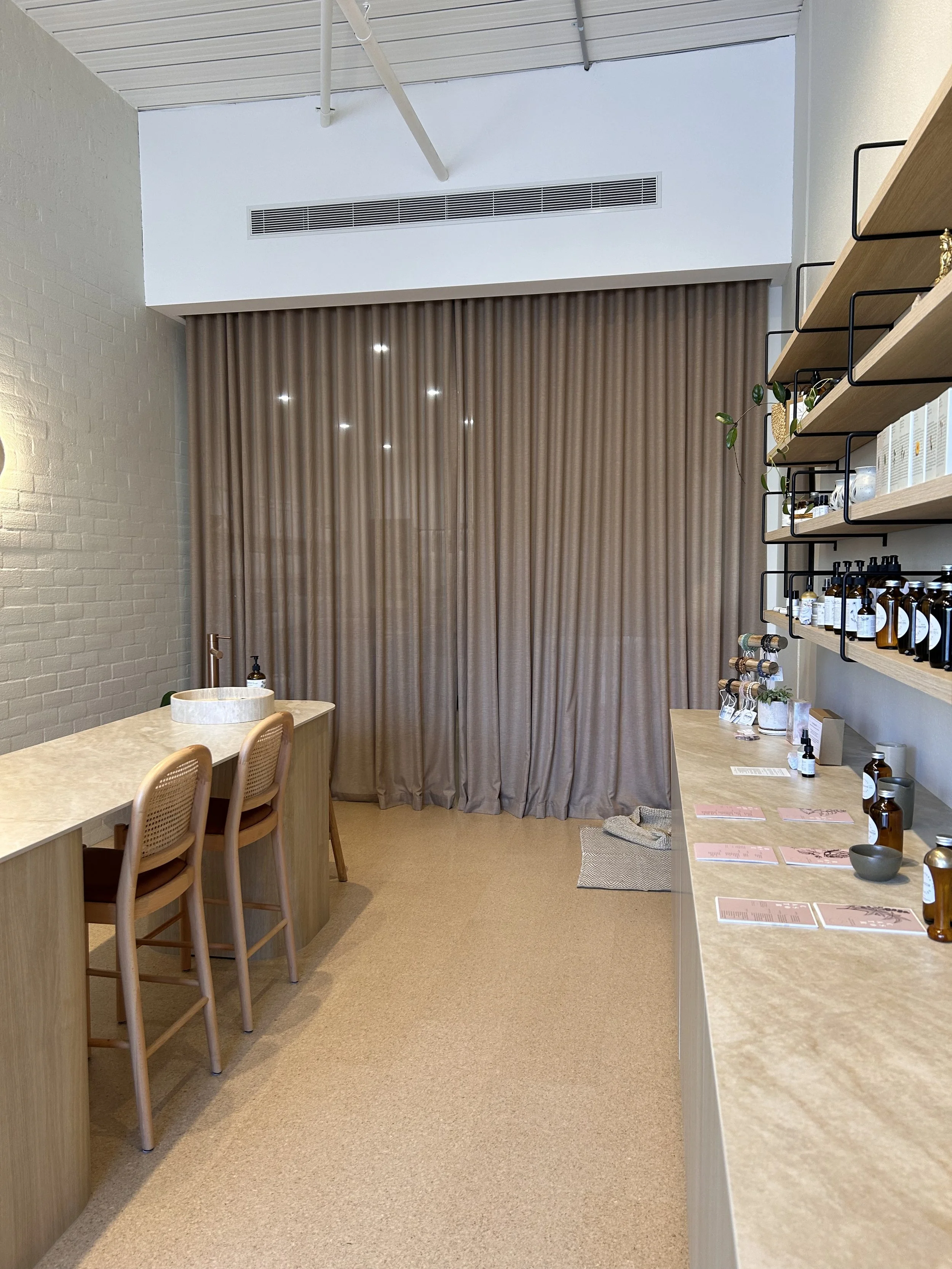
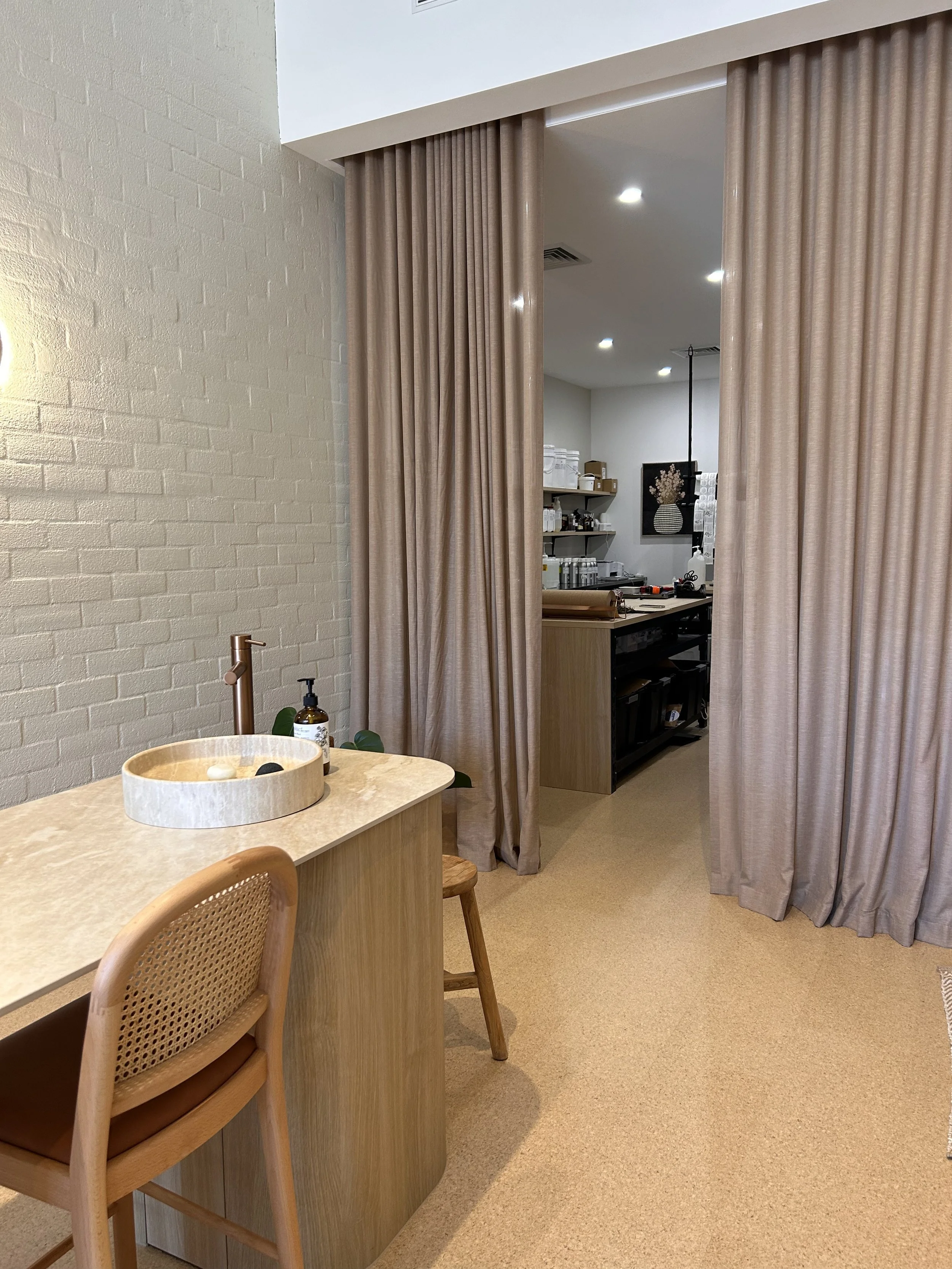
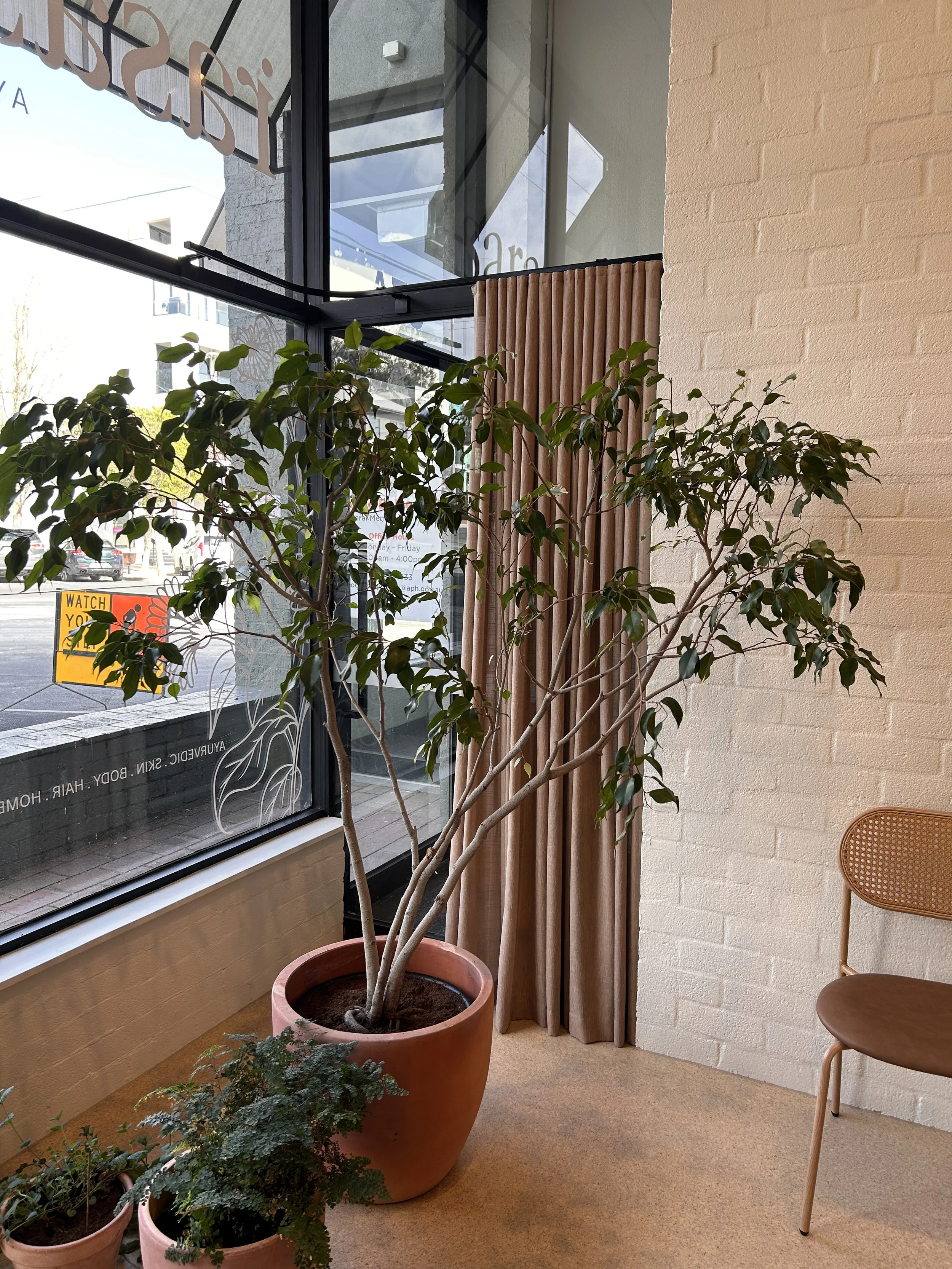
One curtain was installed to divide the treatment and production areas from the retail space. At the front of the shop, another curtain was fitted partly across the window and continued around the corner to screen the office entrance.
Curtains are well suited to this type of commercial layout. They establish a clear boundary while retaining a degree of movement and softness that a fixed partition cannot provide. This was important for Rasasara, where the interior needed to feel calm and connected even when the different working areas were screened from view.
A dividing curtain requires more consideration than simply covering an opening. It may be seen from both sides and from several positions within the room. Its drop, stackback and position affect how people move through the space and how much of the adjoining area remains visible when the curtain is open.
The result depends on resolving those practical details before turning to the fabric itself.
Finding a fabric that belonged in the space
The chosen fabric was Calista in Clay by Warwick Fabrics. Calista is a self-weighted semi-sheer with an open-weave construction. Slubbed yarns of varying widths create a cross-hatched detail and a softly irregular surface. It has some of the natural character people associate with hessian or handwoven textiles, balanced by a fluid drape and a subtle sheen when it catches the light.
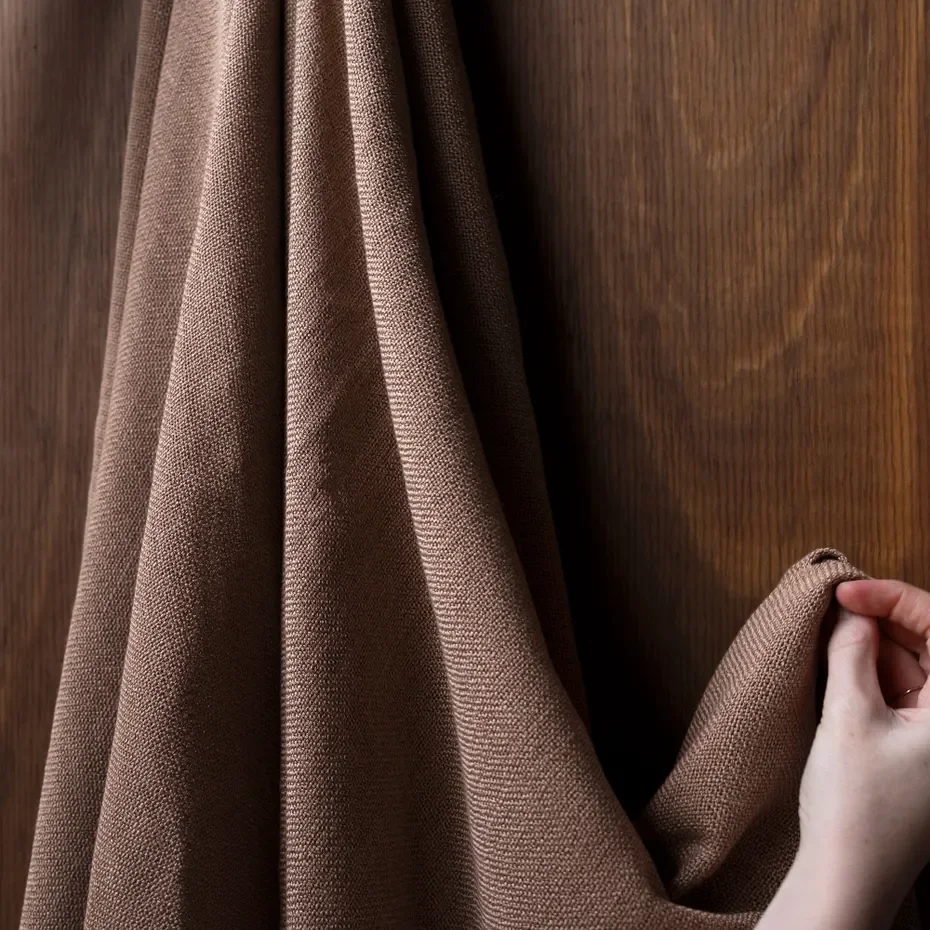
This made it particularly appropriate for Rasasara.
The business has been built around products that are handmade in small batches and closely connected to natural materials. Calista carries a similar sense of texture and irregularity without becoming rustic or heavy. It allowed the curtains to relate to the character of the brand while still feeling refined enough for a customer-facing space.
The Clay colour was equally important. Its warm, earthen tone sits comfortably within Rasasara’s neutral interior and reflects the natural palette used throughout the brand.
Neutral interiors are often treated as though every element must remain beige, white or grey. In practice, a room usually benefits from some variation in tone. The right colour gives the eye somewhere to settle and prevents natural materials from blending into one indistinct surface.
Clay brought that depth to the shop. The colour is present, but it does not overwhelm the products or the room. As daylight passes through the semi-sheer weave, the tone softens and the texture becomes more visible.
Considering performance as well as appearance
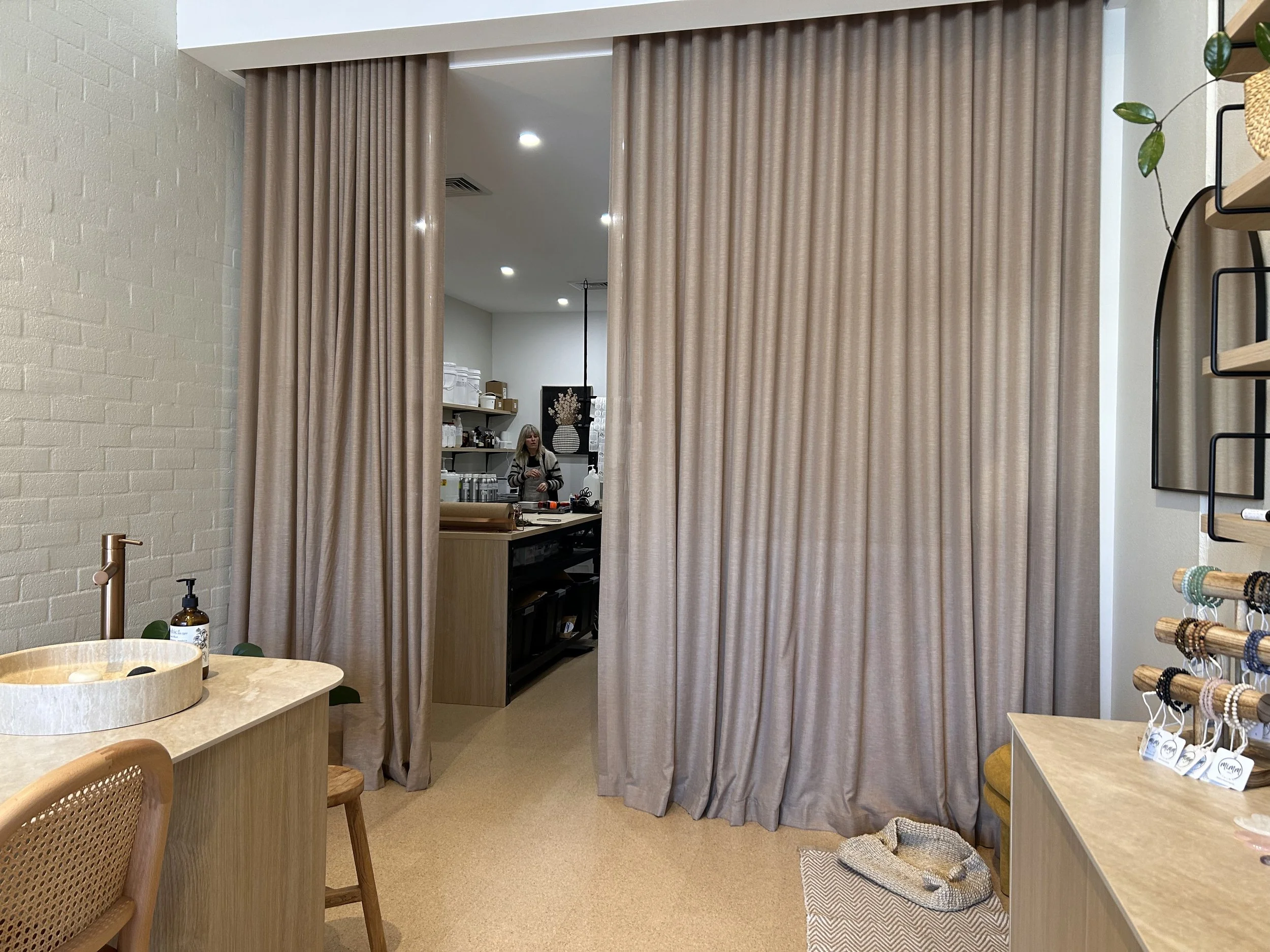
A central opening provides practical access to the working area while the surrounding curtain continues to screen it from the shop.
Calista was developed for both residential and commercial interiors. Its technical properties were therefore relevant to the way the curtains would be used at Rasasara.
The fabric is 300 centimetres wide and continuously constructed. This allows generous drops and large spans to be made with fewer visible joins, which is valuable when a curtain is being used as an architectural element rather than sitting quietly against a window.
Its self-weighted construction helps the fabric fall consistently and creates the relaxed movement the design is intended to have. The 100% polyester composition provides greater stability and practicality than many natural fibres while preserving the dry, textural appearance that suited the interior.
Calista is also Oeko-Tex Standard 100 certified and has been tested under AS/NZS 1530.2, recording a flammability index of 1. These details matter in a commercial project. A fabric still has to satisfy the practical requirements of its setting, regardless of how well its colour and texture suit the design.
A project grounded in Frankston
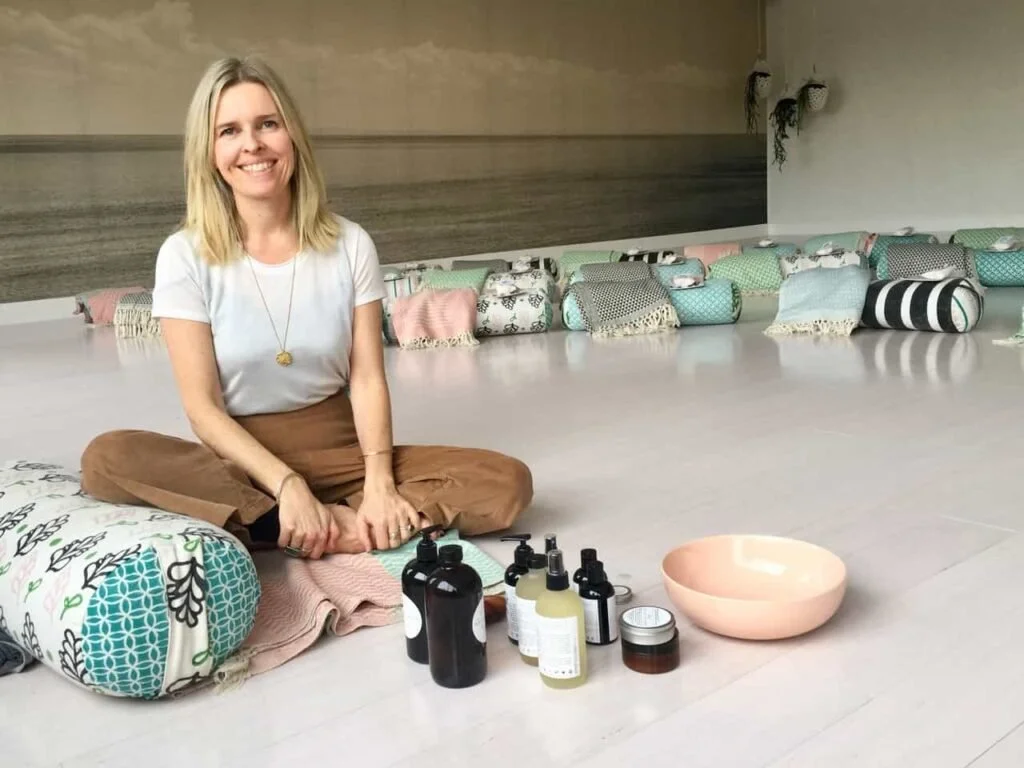
Rasasara founder Sonia Lloyd during an earlier skincare workshop, surrounded by the products and rituals that helped shape the business.
This project brought together two independent businesses with established connections to the area.
Rasasara’s shop gives a business founded more than two decades ago a place to meet its community in person. For Evans, the project continued a relationship that began in a customer’s home and developed as her business entered a new chapter.
The finished curtains create the separation the premises require, but they also contribute something to the experience of the shop. Their texture reflects the handmade quality of Rasasara’s products, while the Clay colour brings warmth to the otherwise restrained interior.
Good commercial window furnishings should feel resolved in this way. They must work with the movement and practical demands of the premises while making sense of the business occupying it.
We were proud to help another Frankston business create a space that feels distinctly its own.
David Nuttall
Evans Curtains and Blinds
Helping Melbourne homeowners make informed window furnishing decisions.
Evans Curtains & Blinds, locally owned and operated.