I Started Recommending Recycled Blind Fabric. Here Is What Changed My Mind.
The certifications, the numbers, and the honest answer to whether the quality is actually there.
I have been in this industry for many years. In that time I have watched a lot of things get labelled sustainable without much to back it up. So when recycled fabric started appearing in the ranges we were being shown by our fabric reps, I was cautious.
What changed my mind was getting the samples in hand and doing the reading on what the certifications actually mean. Here is what I found.
How the fabric is actually made
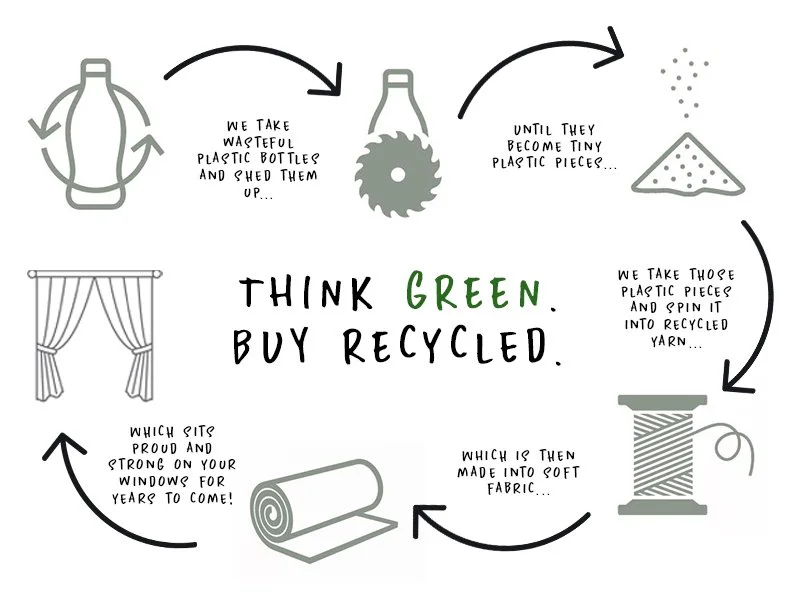
Image by Basford Brands
Post-consumer plastic bottles are collected, sorted, shredded into flakes, melted into liquid polymer, and extruded through fine holes to produce yarn. That yarn is then woven into fabric using the same processes as any conventional textile.
The finished product carries independent certifications. The Global Recycled Standard and Oeko-Tex 100 are the two worth knowing. These are not marketing labels. They mean the supply chain has been audited, the recycled content has been verified, and the finished fabric has been tested to confirm no harmful chemicals are present.
If you are specifying or recommending recycled textiles and a product cannot point to third-party verification, that is worth paying attention to.
The numbers behind one product
One of the fabrics we have started stocking is Recraft by Four Families, a blockout blind fabric with a textured, linen-like weave. It carries the Global Recycled Standard and is 60% recycled polyester from post-consumer PET bottles.
16 bottles per m² of fabric
48 bottles per linear metre of a 3m wide roll
1,200 bottles in a full 25m roll
A single window installation repurposes hundreds of bottles. A whole house project runs into the thousands. For a designer or architect specifying across multiple rooms, those numbers add up quickly.
The honest answer on quality
This is the question I get asked most, and I want to answer it plainly.
The recycled fabrics now available to us sit comfortably alongside conventional options at the same price point. Recraft has a texture and warmth that a lot of standard blockout fabrics simply do not. Warwick's Encore range covers both upholstery and drapery using certified recycled yarn, including options made from recycled wool recovered from fashion garments. James Dunlop's Kumo Recycled is a wide-width sheer in 92% recycled polyester, fire retardant and Oeko-Tex certified.
These are not compromise products sitting quietly at the back of a catalogue. The fabric houses are putting them front and centre because the quality is there.
The fabrics that last in this industry earn their place on quality first. The fact that these are made from recycled materials is a genuine bonus, and for a growing number of clients, a deciding factor.
Why I think this matters for the trade
We run a referral-based business. Every product recommendation reflects on us directly. I would not be stocking these or writing about them if I was not confident in them.
The clients asking about sustainability are becoming more common, and they are asking more specific questions than they used to. The ones who will serve them well are the ones who understand what they are recommending and can back it up. Knowing the difference between a certified recycled product and a greenwashed one is a reasonable place to start.
—
Every month I write a newsletter called Inside the Window.
This month we cover recycled fabric in more detail, what certifications to look for, what a Melbourne home can realistically achieve with the options now available, and what is worth checking around your windows before winter properly arrives.
If that sounds useful, come join the community here.
—
David Nuttall
Evans Curtains and Blinds
#WindowFurnishings #SustainableDesign #InteriorDesign #RecycledMaterials #MelbourneHomes #CircularDesign #EvanscurtainsAndBlinds