Choosing Curtains and Blinds for Kids, Pets and Busy Households
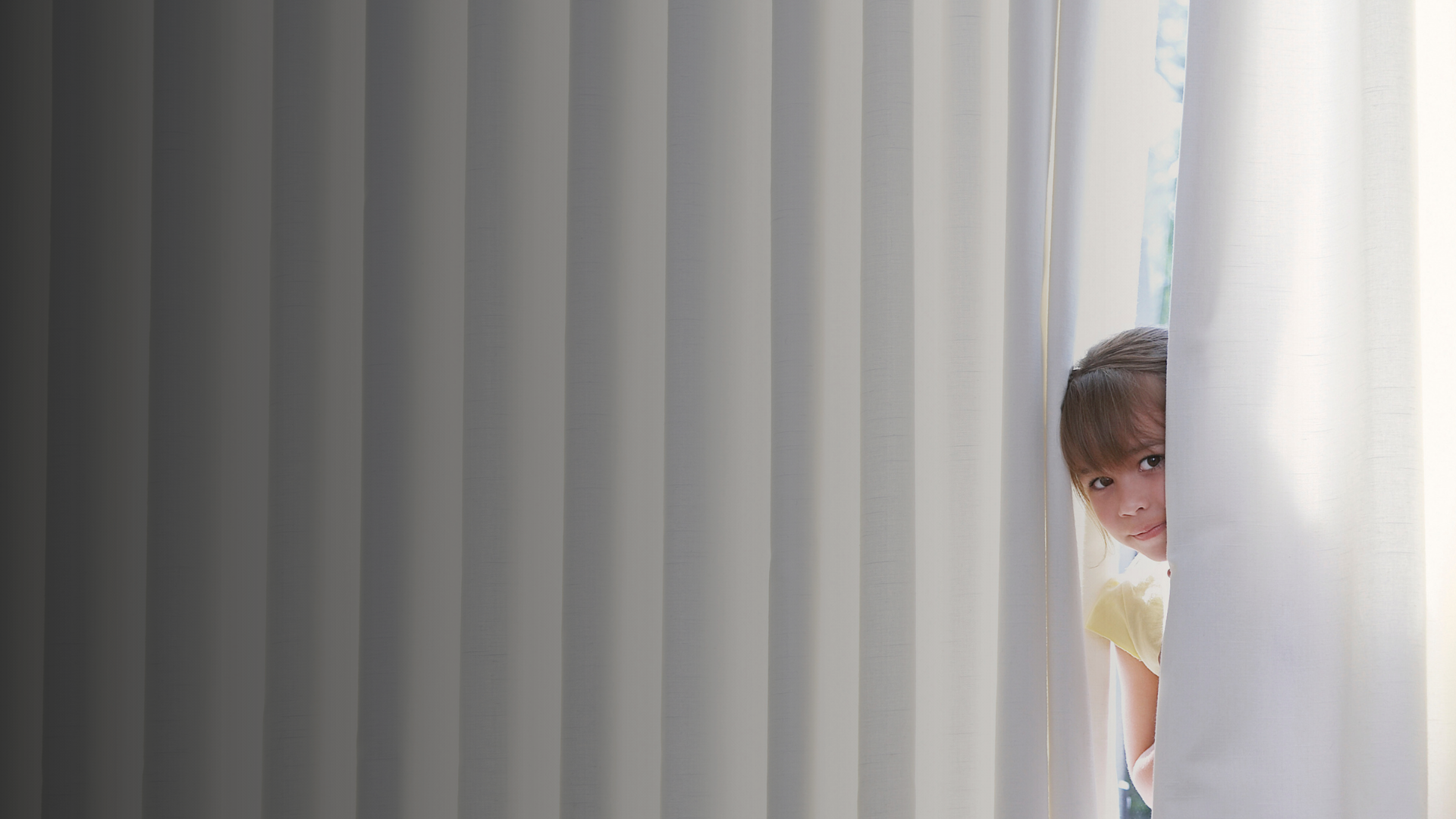
Window treatments take more punishment in a family home than almost anywhere else, between sticky hands, pet fur, steam and the general wear that comes with a house that's actually lived in rather than styled for a photo. The fabric you choose also plays a bigger role in indoor air quality than most people realise until allergies or asthma become part of the conversation. Here's what actually holds up across homes on the Mornington Peninsula, and the reasoning behind each recommendation.
What to avoid if you have young kids or pets
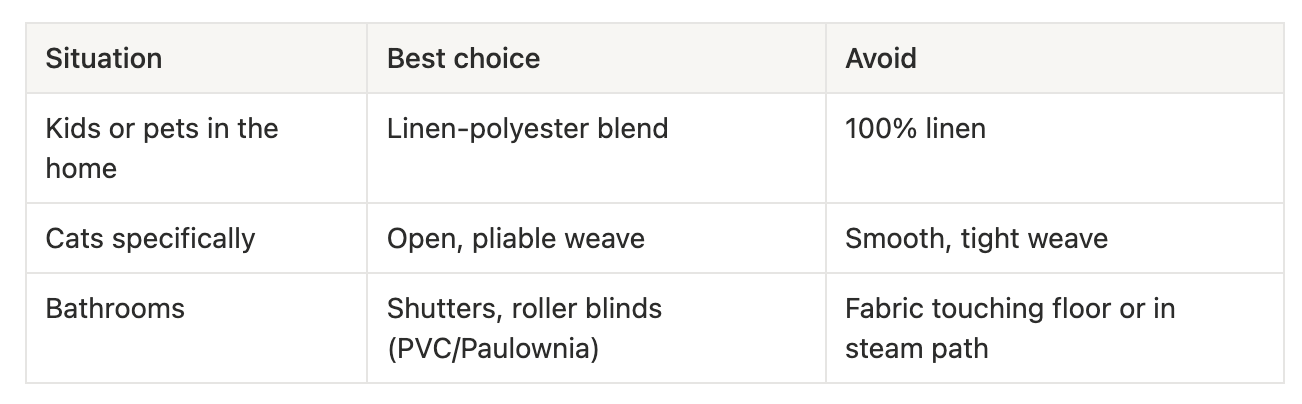
Linen sheers made from 100% linen are usually the first fabric we steer families away from, because as beautiful as linen looks in a showroom, it's genuinely difficult to keep clean once real life gets involved, and a household with kids or pets puts that fabric under daily pressure it was never really built to handle.
There's a health angle worth understanding here too, beyond the maintenance question. The National Asthma Council Australia lists curtains and blinds among the common household items where dust mite allergens accumulate over time, alongside bedding and upholstered furniture, and recommends cleaning window coverings regularly as part of reducing exposure for people with allergies or asthma. A fabric that can actually go through a wash cycle without falling apart isn't just easier to live with day to day; it's doing genuine work for anyone in the household who reacts to dust or allergens, which the Council notes affects a significant share of Australian kids.
We tend to recommend a fabric blend with a percentage of polyester woven through instead. Blends hold their shape well over years of regular washing, resist sun and heat damage in a way pure linen struggles with, and generally show far less wear by the time a family's ready to redecorate. This isn't just something we've settled on through trial and error in the workroom. James Dunlop Textiles, a long-established supplier to the Australian fabric trade, points to UV degradation as one of the biggest factors in how long curtain fabric actually lasts here, and rates polyester among the most UV-resilient fibres on the market, which matters more in Australian conditions than it does in the cooler climates linen curtains were originally designed around.
If there's a cat in the house specifically, we'll often suggest a more open, pliable weave rather than something smooth and tightly woven, because a cat that plucks at a smooth fabric tends to leave a visible pull that's hard to disguise, while a looser weave lets you gently work the fibres back into place without it being obvious.
The most durable option for a busy household
There isn't a single miracle fabric that solves every problem, but a linen-polyester blend is the option we come back to most often when durability matters as much as appearance. It holds its shape through repeated washing, resists sun damage noticeably better than pure linen, and doesn't demand the kind of careful handling that a busy household rarely has time for.
Younger families in particular tend to go through curtains faster than an older couple living quietly by themselves, simply because the house sees far more daily wear from kids, pets and general activity, so choosing something durable from the outset usually saves a premature replacement a few years down the track. If a client has genuinely fallen in love with a specific linen fabric, a good workroom can usually find a similar-looking blend that performs better under pressure, rather than talking them out of the look they actually wanted.
Bathrooms bring a different set of problems
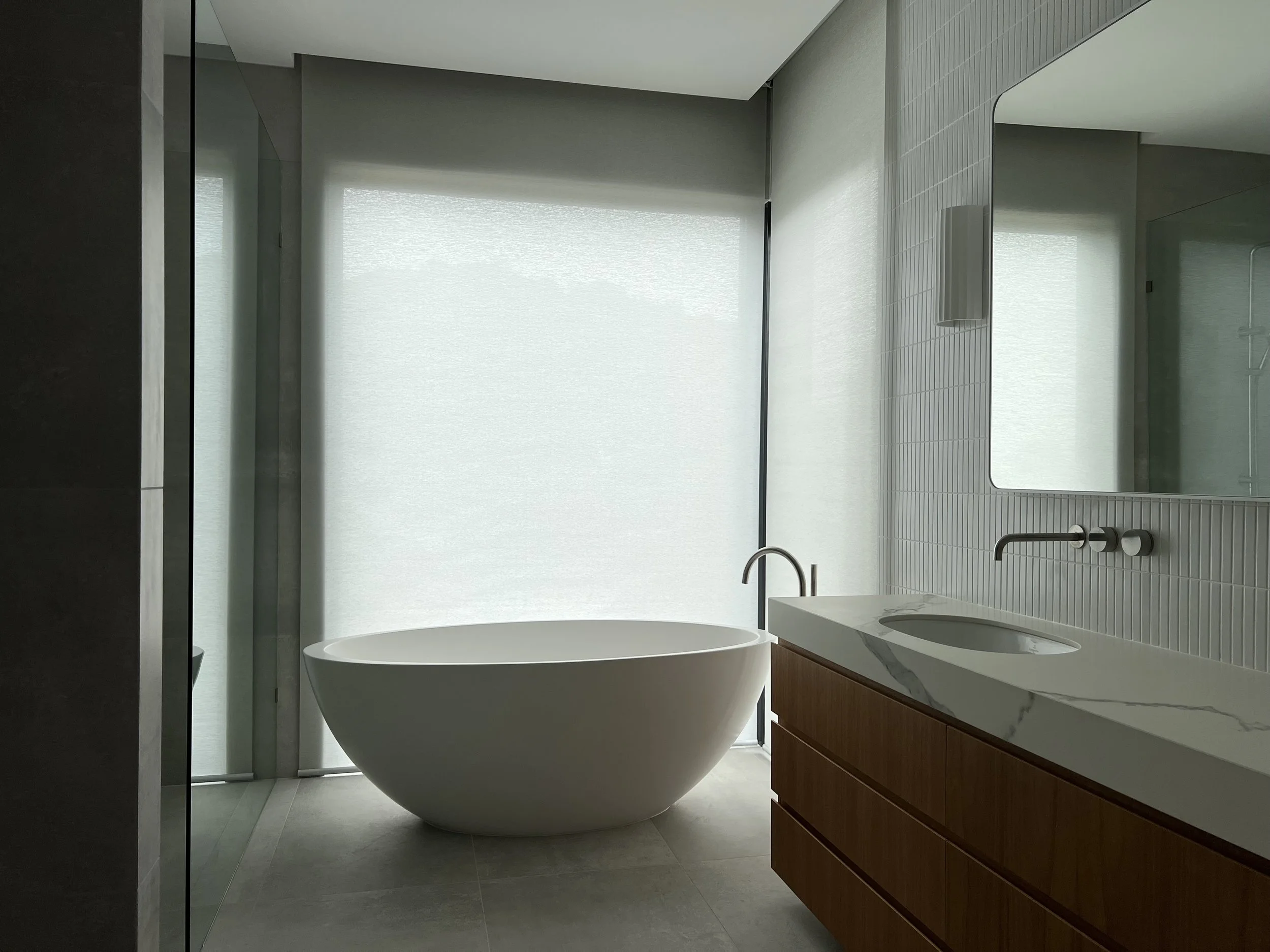
Bathrooms wear out window treatments through humidity rather than everyday handling, and it's a more significant issue across Australia than a lot of homeowners realise. The World Health Organisation estimates mould is present in up to half of Australian homes, and bathrooms, given the combination of heat, water and often limited airflow, are among the most common places it develops. NSW Health lists a runny or blocked nose, irritation of the eyes and skin, and asthma flare-ups among the effects of ongoing mould exposure, which makes the material choice in a bathroom more of a health decision than a purely visual one.
Shutters and roller blinds tend to be the most reliable options for wet areas overall, and PVC and Paulownia are the two materials that consistently perform best against mould, mildew and the daily condensation a bathroom generates.
Sheer curtains can still work in a bathroom, and we've done plenty that give a newer ensuite a genuinely spa-like feel, but they need real thought put into positioning. Keeping the fabric off the floor, away from moisture and out of areas that collect hair and dust matters, as does choosing a fabric and position that keeps it clear of direct steam contact. Handled properly, sheers can hold up well in a bathroom for years. Handled carelessly, premature mould or mildew becomes likely fairly quickly.
The chemical treatments once used to protect fabric against mould and mildew have largely been phased out across the industry, mostly because they weren't particularly good for the people living with them either, which means fabric choice and correct positioning now carry more of the weight than they used to when a chemical coating could paper over a poor material decision.
For architects and interior designers, early involvement can make a major difference to the final result.
We can assist with track design, spatial allowances, stack-back, fabric selection and installation planning before the details become difficult to change.
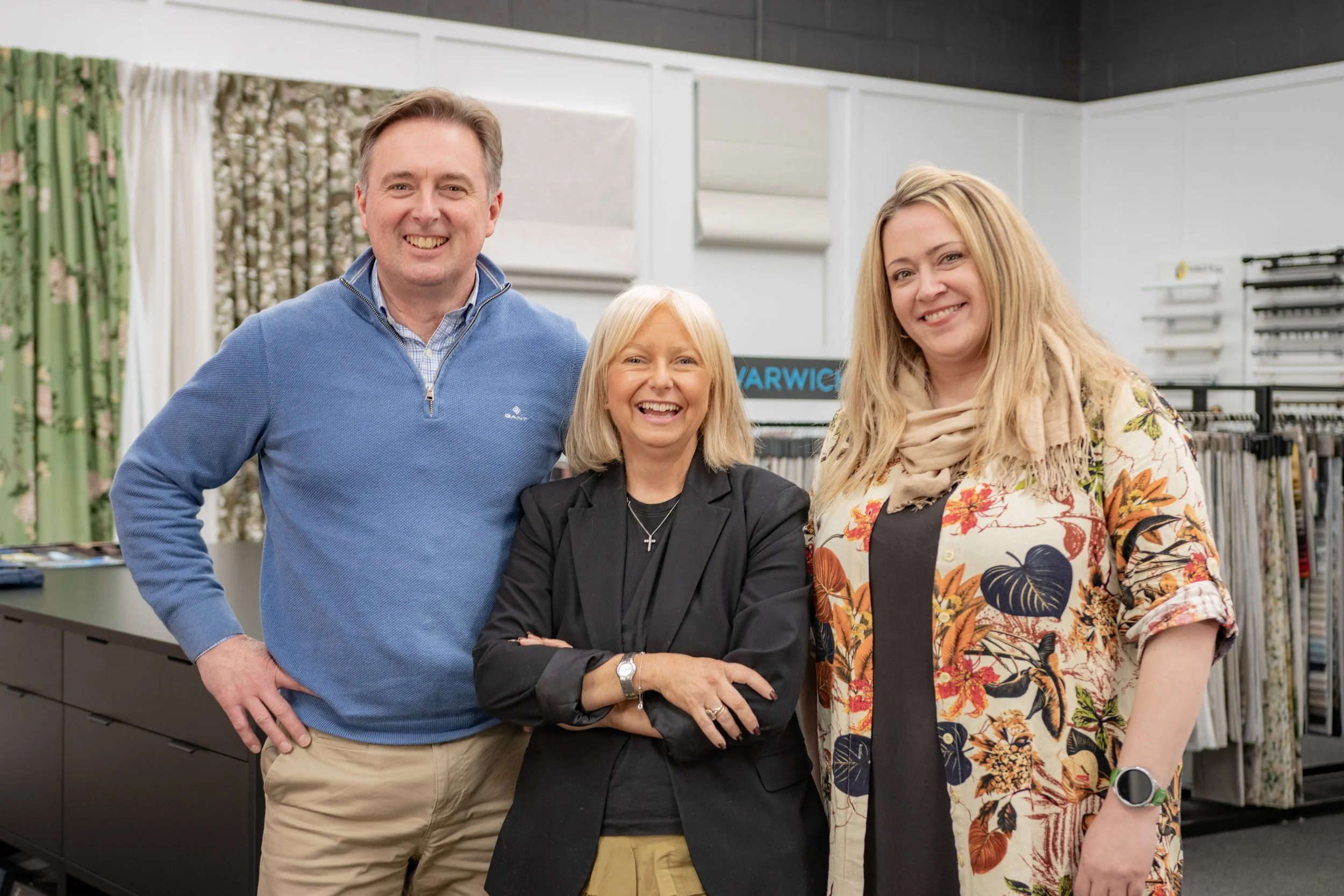
Evans Curtains & Blinds, locally owned and operated.
Frequently asked questions
Are linen curtains bad for allergies?
Linen itself isn't inherently a problem, but because pure linen is harder to wash regularly, curtains that go uncleaned for long stretches can accumulate dust mite allergens over time. The National Asthma Council Australia recommends cleaning window coverings regularly as part of managing allergen exposure, which is a much easier habit to keep up with a washable blend fabric than with delicate pure linen.
What curtain fabric lasts longest in direct sun in Australia?
Polyester and polyester blends generally hold their colour and structure longer under UV exposure than pure natural fibres, according to Australian textile trade guidance, which matters more here than in cooler, lower-UV climates where a lot of linen curtain trends originated.
What's the best material for bathroom blinds in Australia?
PVC and Paulownia consistently perform best against the humidity, condensation and mould risk common in Australian bathrooms, an issue the World Health Organisation estimates affects roughly half of Australian homes to some degree.